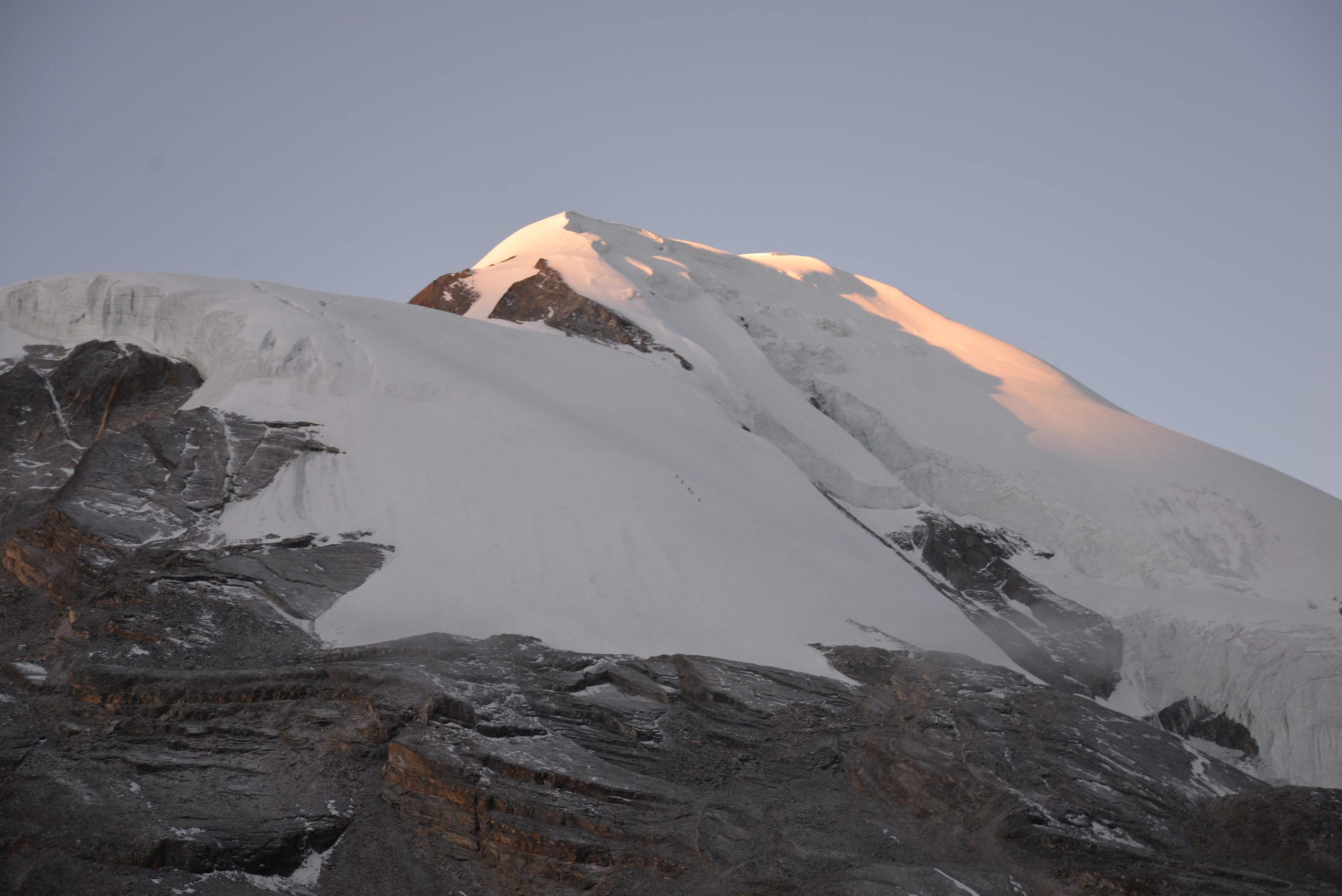

Throng Peak Elevation
6144m

Group Size
Min.2 Pax

Duration
17 Days

Difficulty
Moderately Difficult

Accomodation
Hotel/Lodges/Camping

Meals
L.D.B

Best Seasons
March-May & Sept-Nov

Transportation
Vehicles and Flight

Region
Annapurna Region
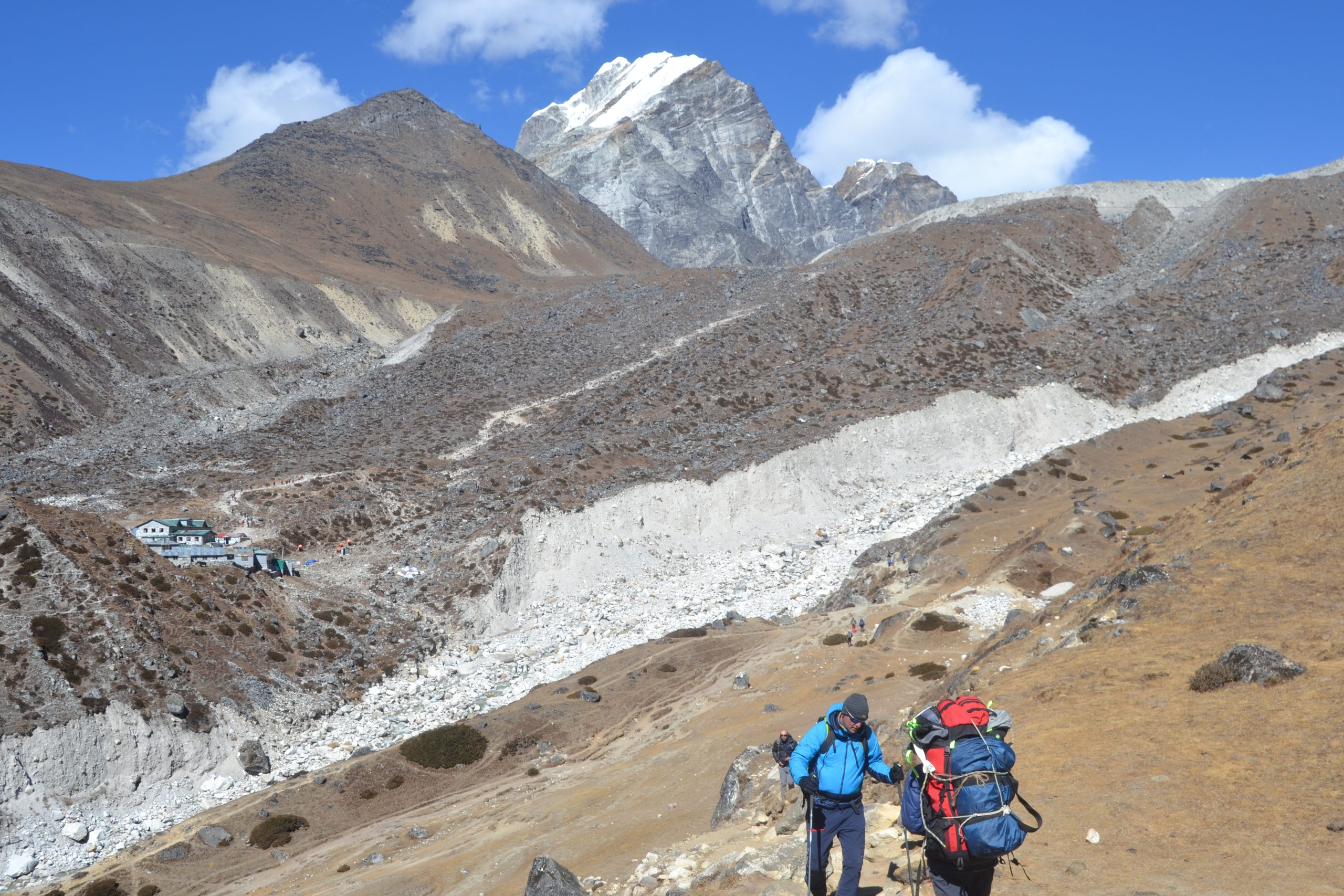
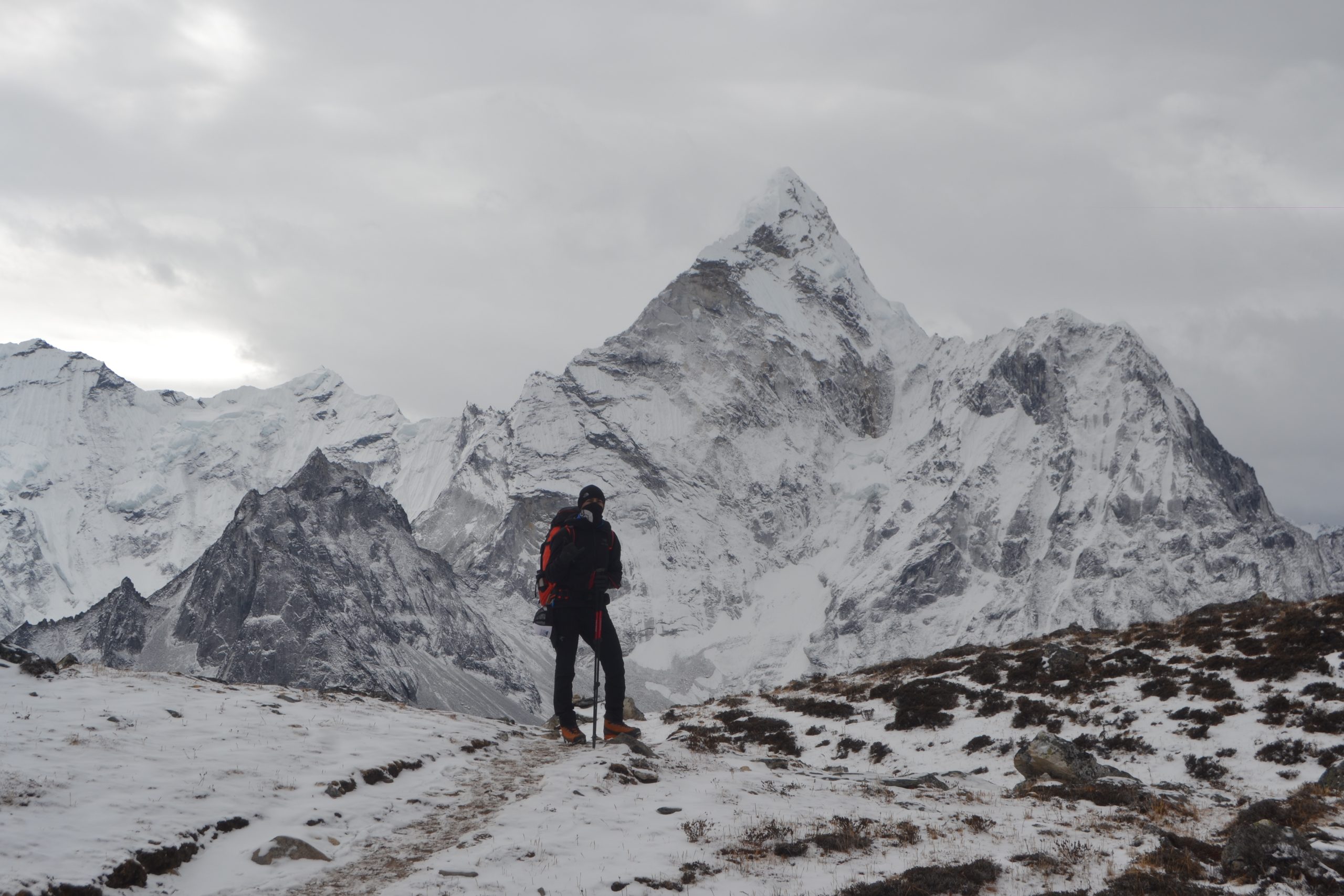
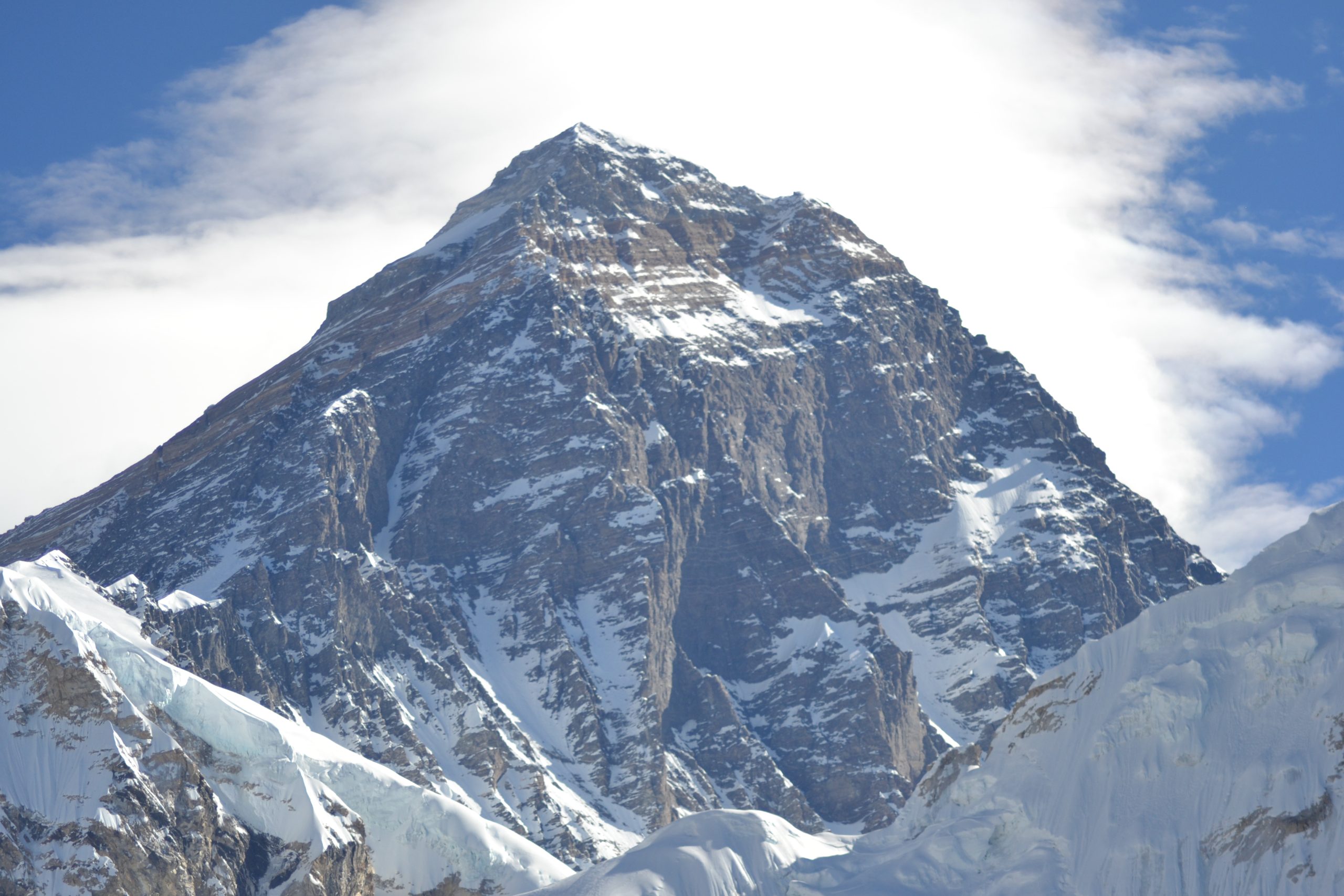
For those seeking an exhilarating yet achievable peak climbing experience, Thorong Peak Climbing (6144m) offers a perfect blend of adventure, breathtaking landscapes, and cultural immersion. Situated in the heart of the Annapurna region, this trek takes you through rugged mountain terrain, lush forests, and traditional villages, culminating in the ascent of Thorong Peak. Whether you’re an avid trekker or an aspiring mountaineer, this climb promises an unforgettable adventure, offering stunning panoramic views of some of the world’s tallest mountains.
Beyond the climb, you’ll journey through the captivating Gurung villages, where ancient Buddhist traditions and distinct architecture offer a glimpse into Nepal’s spiritual heritage. As you ascend through rhododendron forests, you’ll encounter not only Nepal’s national flower in full bloom but also Yak and other unique wildlife, enhancing the natural beauty of this remote wilderness.
Your journey starts at Bhulbhule (840m), a low-altitude village, and gradually climbs through picturesque landscapes, from subtropical forests and terraced farmlands to high-altitude alpine meadows and rocky outcrops. Along the way, you’ll encounter quaint villages such as Marpha, known for its apple orchards, and Jomsom, a key hub in the Mustang region.
The highlight of the trek comes as you reach Thorong La Pass (5146m), a natural gateway between Manang and Mustang, offering magnificent views of some of the tallest peaks on Earth, including Annapurna I (8091m) and Dhaulagiri (8167m). From here, the trail leads up to Thorong Peak, a climb that tests your endurance while rewarding you with a 360-degree panorama of the Himalayas. The ascent is non-technical but challenging, making it ideal for trekkers looking to push their limits.
This trek is not only about the physical challenge but also a deep dive into Nepal’s cultural tapestry. You will trek through Gurung and Thakali villages, experiencing their rich Buddhist traditions and hospitality. Villages like Marpha and Tukuche offer an insight into the ancient Tibetan and Nepalese trade routes, with their cobbled streets, stone houses, and Buddhist stupas. Visiting Muktinath, a revered pilgrimage site for both Hindus and Buddhists, is a spiritual highlight that adds depth to your adventure. This temple, located at the foot of Thorong La Pass, is renowned for its 108 water spouts and eternal flame, symbolizing both earth and fire elements.
The best time to climb Thorong Peak is during the spring (March-May) and autumn (September-November). These seasons offer stable weather, clear skies, and optimal conditions for climbing. In the spring, the forests are ablaze with blooming rhododendrons, while autumn offers crystal-clear views of the Himalayan range.
If you’re seeking a once-in-a-lifetime adventure that combines the thrill of high-altitude climbing with rich cultural experiences, Thorong Peak Climbing is the perfect choice. Let Save Mountain Treks & Expedition guide you on this unforgettable journey, ensuring your safety and comfort every step of the way.
Upon your arrival at Tribhuvan International Airport in Kathmandu, a representative from Save Mountain Treks & Expedition will warmly welcome you and transfer you to your hotel in the city. This first day is about settling in and getting a briefing on what to expect in the coming days, including preparation for the trek. After checking in, take some time to explore the bustling streets of Thamel, Kathmandu’s famous tourist district, or relax at your hotel to prepare for the journey ahead.
Kathmandu is a city rich in history and culture, so if time permits, feel free to visit some of the nearby UNESCO World Heritage Sites such as Swayambhunath (Monkey Temple) or Kathmandu Durbar Square. Rest well as tomorrow marks the start of your exciting adventure into the heart of the Annapurna region.
The adventure begins early as you embark on a scenic drive from Kathmandu to Jagat. Covering a distance of approximately 190 kilometers, this journey will take around 7 to 9 hours by vehicle. The drive takes you through Besisahar, where you’ll register with local authorities before continuing toward Bhulbhule and eventually reaching Jagat. The views along the way are a perfect introduction to Nepal’s diverse landscapes, from lush green valleys to terraced fields and riverside settlements.
As you traverse the Marsyangdi River Valley, you’ll get your first taste of the Himalayan foothills, passing by waterfalls, rice paddies, and traditional villages. Jagat, a quaint village surrounded by terraced farms, will be your resting place for the night as you prepare to transition from road travel to trekking.
The real trekking adventure begins today, with a 5-6 hour hike from Jagat to Dharapani, covering a distance of approximately 15 kilometers. The trail gradually ascends through the Marsyangdi River valley, crossing suspension bridges and meandering through lush green forests and terraced fields.
Along the way, you’ll pass through traditional villages, including Chamje, which offers spectacular views of waterfalls cascading down steep cliffs. As you climb higher, the landscape begins to change, and the cool mountain air becomes more noticeable. You’ll arrive at Dharapani, a peaceful village surrounded by towering cliffs and forests, marking your first major ascent.
Today’s trek takes you from Dharapani to Chame, the district headquarters of the Manang region. The 16 km trail ascends through pine and fir forests, offering stunning views of Lamjung Himal and Annapurna II. You will pass through the Tibetan village of Bagarchhap, known for its traditional architecture and prayer wheels, which gives trekkers a taste of the Tibetan Buddhist culture that dominates this region.
As you continue climbing higher, the trail opens up into wider valleys surrounded by apple orchards and alpine pastures. Upon reaching Chame, you’ll be rewarded with a dramatic view of Lamjung Himal rising behind the village. Chame is a vibrant and bustling village, providing a great place to relax and soak in the local culture.
Today’s trek is relatively short, covering approximately 14 km from Chame to Pisang, but the scenery along the way is nothing short of spectacular. You’ll trek along a narrow, deep gorge, passing Telekhu and re-crossing the Marsyangdi River via a suspension bridge. The views open up to panoramic vistas of Annapurna II, Pisangan, and other peaks in the Annapurna massif.
As you reach Pisang, the village sits under the shadow of Pisang Peak (6,091m), offering a surreal alpine atmosphere. You can explore the Upper Pisang region for some excellent views or visit local monasteries. The village is also an important stop for acclimatization as you ascend higher into the Manang Valley.
Today’s trek covers approximately 20 kilometers, making it one of the longer days. Leaving Pisang, you will follow the upper route to Manang, passing through Braka, a Tibetan village known for its Braka Monastery, the largest gompa in the region, perched on a hillside. This is a day of gradual ascents, offering magnificent views of Annapurna III (7555m), Gangapurna (7454m), and other peaks.
Manang is a popular acclimatization stop and a hub for trekkers, with plenty of facilities including shops, bakeries, and trekking lodges. As you stroll through its narrow streets, you’ll feel the cultural richness of the Tibetan Buddhist heritage. This is where trekkers prepare for the higher altitudes ahead.
Today is dedicated to acclimatization, a crucial part of preparing for the high-altitude trek ahead. You’ll have the option of taking a short hike up to Khangsar (3756m), which offers stunning views of the surrounding peaks, including Annapurna II, Tilicho Peak, and Chulu East. Staying active at this elevation helps your body adjust to the thin air and reduces the risk of altitude sickness.
While in Manang, you can also explore the local Tibetan villages and monasteries, soaking in the spiritual and cultural atmosphere of this remote mountain region. Take the time to rest and enjoy the beauty of this alpine setting before heading to higher ground.
Today’s trek is a steady climb of around 10.4 km as you make your way to Yak Kharka, a small village surrounded by grazing yaks and alpine meadows. The trail ascends through juniper forests and gradually rises into more barren terrain, with fewer trees and more rocky landscapes. You’ll feel the altitude more intensely as you reach Yak Kharka, where the air is thinner, but the surrounding views are absolutely stunning.
Yak Kharka is a quiet stopover where trekkers adjust to the higher altitude. The landscapes here feel remote and isolated, giving you a true sense of adventure as you prepare for the upcoming crossing of the Thorong La Pass.
A shorter day in terms of distance, today’s trek takes you about 8 km from Yak Kharka to Thorong Phedi, the base camp before the Thorong La Pass. The trail gradually ascends, passing steep bluffs and narrow ridges. Along the way, you may spot wildlife like blue sheep or the elusive snow leopard. Keep your eyes peeled for the majestic Lammergeyer, a bearded vulture known to soar in the skies above.
Upon reaching Thorong Phedi, you can choose to stay here or continue another hour up to High Camp (4,800m) for better acclimatization. Thorong Phedi marks the end of the tree line, and you’ll feel the raw, barren beauty of the Himalayas as you prepare for the highest point of the trek.
This is arguably the most challenging day of the trek, as you ascend to the high Thorong La Pass (5,416m), the highest point of the trek. The trail is steep and can be tough due to the high altitude, cold temperatures, and sometimes strong winds. Covering approximately 16 kilometers, you’ll be rewarded with stunning panoramic views of Annapurna, Dhaulagiri, Gangapurna, and other towering peaks.
Once you’ve crossed the pass, the trail descends steeply for about 1,600 meters, leading you down to Muktinath. The Muktinath Temple, a sacred pilgrimage site for both Hindus and Buddhists, will mark the end of your day. The sight of the 108 water spouts and eternal flame adds a spiritual dimension to your journey.
Today is a crucial day for preparing for your climb to Thorong Peak. Your guide will conduct a thorough briefing on climbing techniques, roping, and safety measures. Depending on the weather conditions and how the group is feeling, you may take some short hikes to adjust further. The goal of today is to ensure you are well-rested and fully equipped for tomorrow’s climb.
This day is all about fine-tuning your preparations, as climbing at high altitude requires not just physical strength but also mental preparedness. Take the time to go over all your gear and make sure you’re comfortable with the route and what lies ahead.
Today is the pinnacle of your adventure—the climb to the summit of Thorong Peak. You’ll start in the early hours of the morning, trekking under the stars in the cold, crisp mountain air. The climb involves ascending steep, snow-covered slopes, but every step brings you closer to the summit and the breathtaking 360-degree views of the Annapurna, Dhaulagiri, and Gangapurna ranges.
Reaching the summit of Thorong Peak at 6,144 meters is an incredible accomplishment. The effort of the climb is rewarded with jaw-dropping views that few trekkers ever experience. After spending some time on the summit, taking in the vistas and capturing the moment, you’ll begin your descent back to Thorong Phedi.
This is a contingency day set aside in case of bad weather or altitude sickness. If everything goes as planned, you will use this day to continue your trek towards Muktinath, a sacred place for Hindus and Buddhists. The journey here offers further chances to explore the Muktinath Valley, famed for its spiritual significance and the natural beauty of its landscape.
Today’s trek is a pleasant descent from Muktinath to Jomsom, covering around 15 kilometers. The trail takes you through the Kali Gandaki Gorge, the world’s deepest gorge, with Dhaulagiri on one side and Annapurna on the other. You’ll pass through Kagbeni, a medieval village with ancient architecture, before continuing toward Jomsom.
Jomsom is a bustling town in the Mustang District, situated on the banks of the Kali Gandaki River. The strong winds here are famous, as is the town’s vibrant culture. Enjoy a well-deserved rest at one of the local lodges.
After an early breakfast, you’ll take a short 15 to 20-minute scenic flight from Jomsom to Pokhara. The flight offers incredible aerial views of the Himalayas, giving you one last glimpse of the majestic peaks before landing in Pokhara. Once in Pokhara, you’ll be transferred to your hotel, where you can relax and enjoy the laid-back lakeside atmosphere of this beautiful city.
Pokhara offers plenty of opportunities for relaxation and sightseeing. You can explore the World Peace Pagoda, visit Devi’s Falls, or simply stroll along the banks of Phewa Lake. In the evening, enjoy a celebratory dinner to reflect on your incredible journey.
Today, you’ll embark on a scenic drive back to Kathmandu, covering a distance of around 200 kilometers. The drive takes approximately 6-7 hours, passing through rural villages, terraced fields, and along rivers as you make your way back to Nepal’s capital. After arriving in Kathmandu, you’ll have time to explore the city or relax before your departure.
Reflect on the epic journey you’ve undertaken, from the bustling streets of Kathmandu to the remote mountain peaks of Thorong La and beyond. Your adventure through the Annapurna region is sure to leave you with memories that last a lifetime.
Your Thorong Peak Climbing adventure comes to an end today. A representative from Save Mountain Treks & Expedition will transfer you to Tribhuvan International Airport for your departure flight. As you head home, you’ll carry with you the unforgettable memories of summiting Thorong Peak and trekking through the stunning landscapes and rich cultural heritage of Nepal.
Thorong Peak Climbing (6,144m) is a high-altitude trekking and peak-climbing adventure in the Annapurna region of Nepal. The journey combines trekking through picturesque valleys, traditional villages, and alpine terrain, culminating in the summit of Thorong Peak, which offers breathtaking views of the surrounding Annapurna Massif and Dhaulagiri range. It is an excellent climb for trekkers with good fitness looking for a non-technical peak ascent.
Thorong Peak Climbing is considered moderately difficult. While the climb is not highly technical, it requires a good level of physical fitness due to the high altitude (6,144m) and long trekking days. You will need to be comfortable walking on snow and ice with crampons and using basic climbing gear like ice axes and ropes.
The best time for Thorong Peak Climbing is during the spring (March to May) and autumn (September to November) seasons. These periods offer stable weather, clear skies, and favorable climbing conditions. The spring season is especially beautiful with blooming rhododendrons, while autumn offers clearer skies and stunning mountain views.
No, Thorong Peak Climbing does not require prior technical climbing experience. However, you should have trekking experience at high altitudes (above 4,000m) and be comfortable using basic mountaineering equipment like crampons, ropes, and an ice axe. The climb is physically demanding, so preparation and fitness are essential.
To successfully complete the trek and climb, you should be in good physical condition, with strong endurance and cardiovascular fitness. You should be comfortable trekking for 5-8 hours per day at high altitudes, carrying a daypack. Pre-trek training that includes hiking on uneven terrain, cardiovascular exercises like running, and strength training for your legs and core will help prepare you.
You will need the following permits for Thorong Peak Climbing:
Yes, travel insurance is essential for Thorong Peak Climbing. Your insurance should cover high-altitude trekking and climbing (up to 6,144m), emergency evacuation by helicopter, and medical expenses. Make sure your policy includes coverage for mountaineering and potential accidents, as well as any cancellations or delays due to weather.
If the weather conditions are poor, your guide may adjust the schedule or delay the climb for safety reasons. An extra day is built into the itinerary for flexibility in case of weather-related delays or altitude sickness. Your safety is the top priority, so it’s important to be patient and prepared for potential delays.
Booking Form